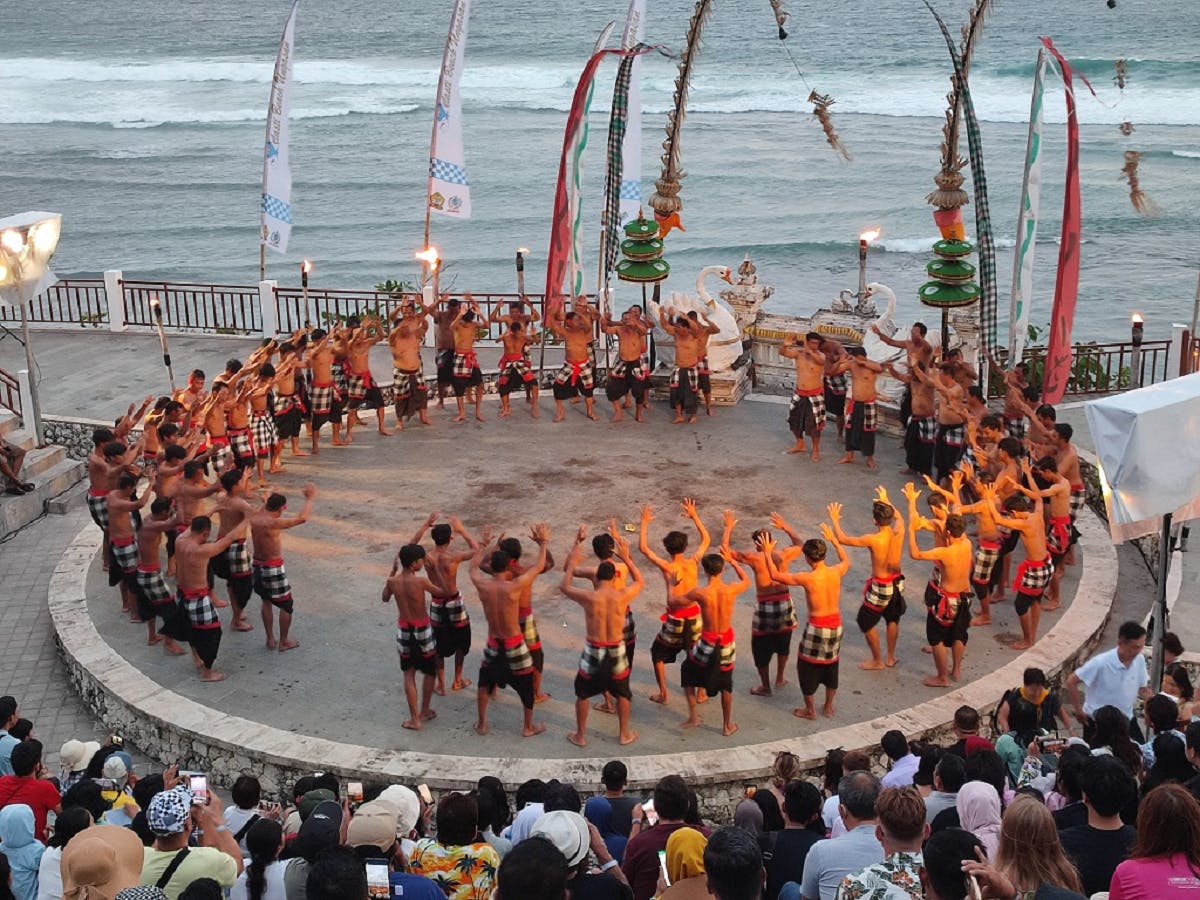

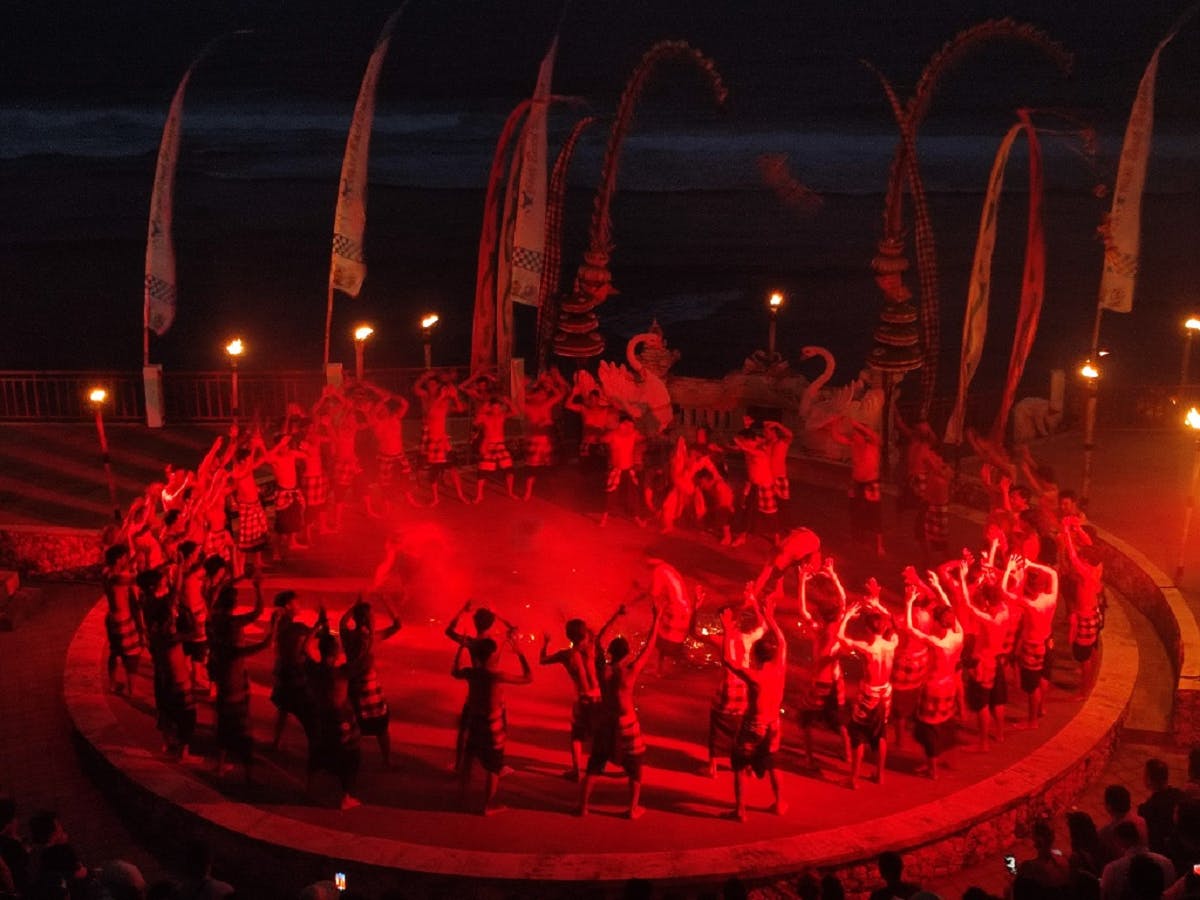
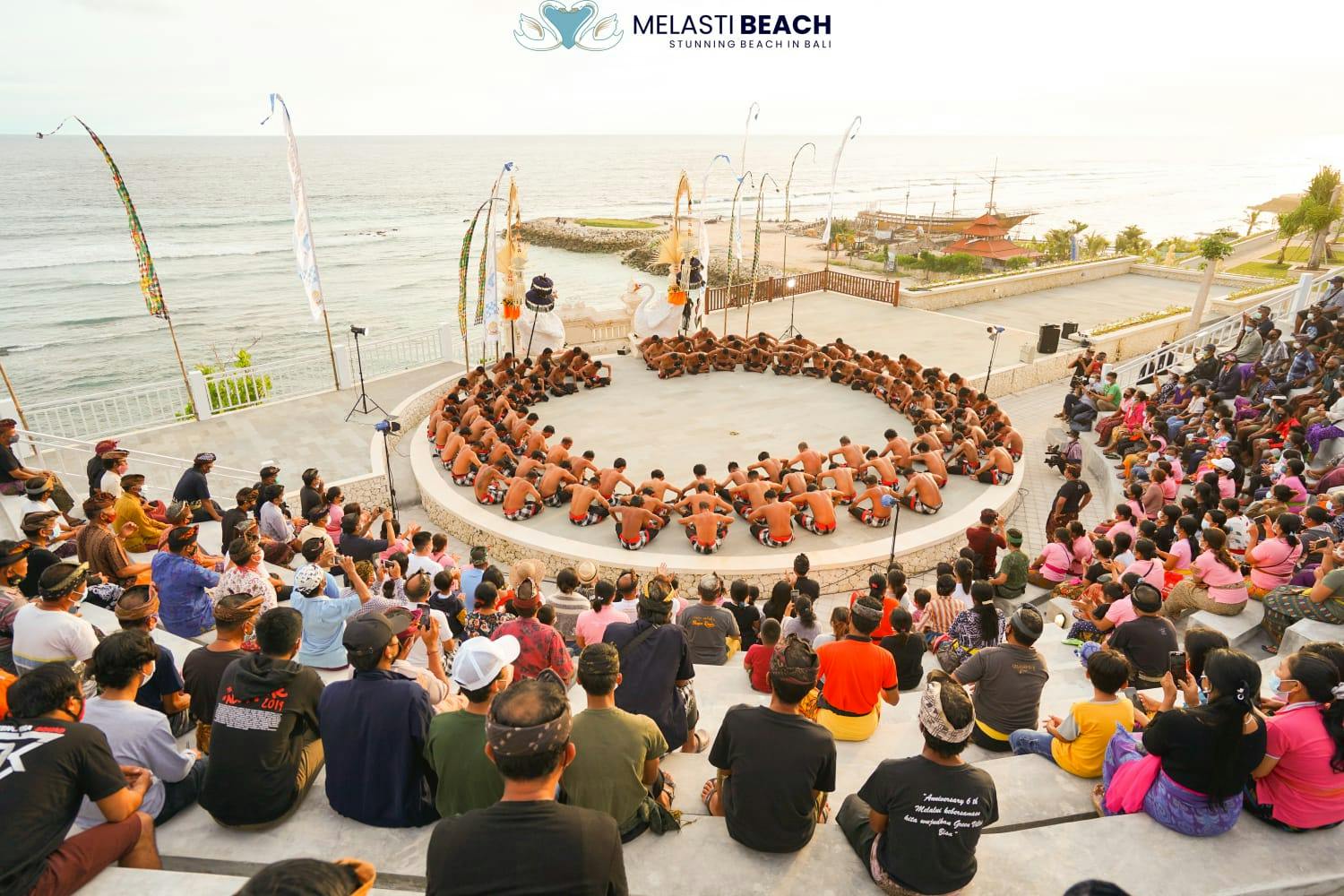
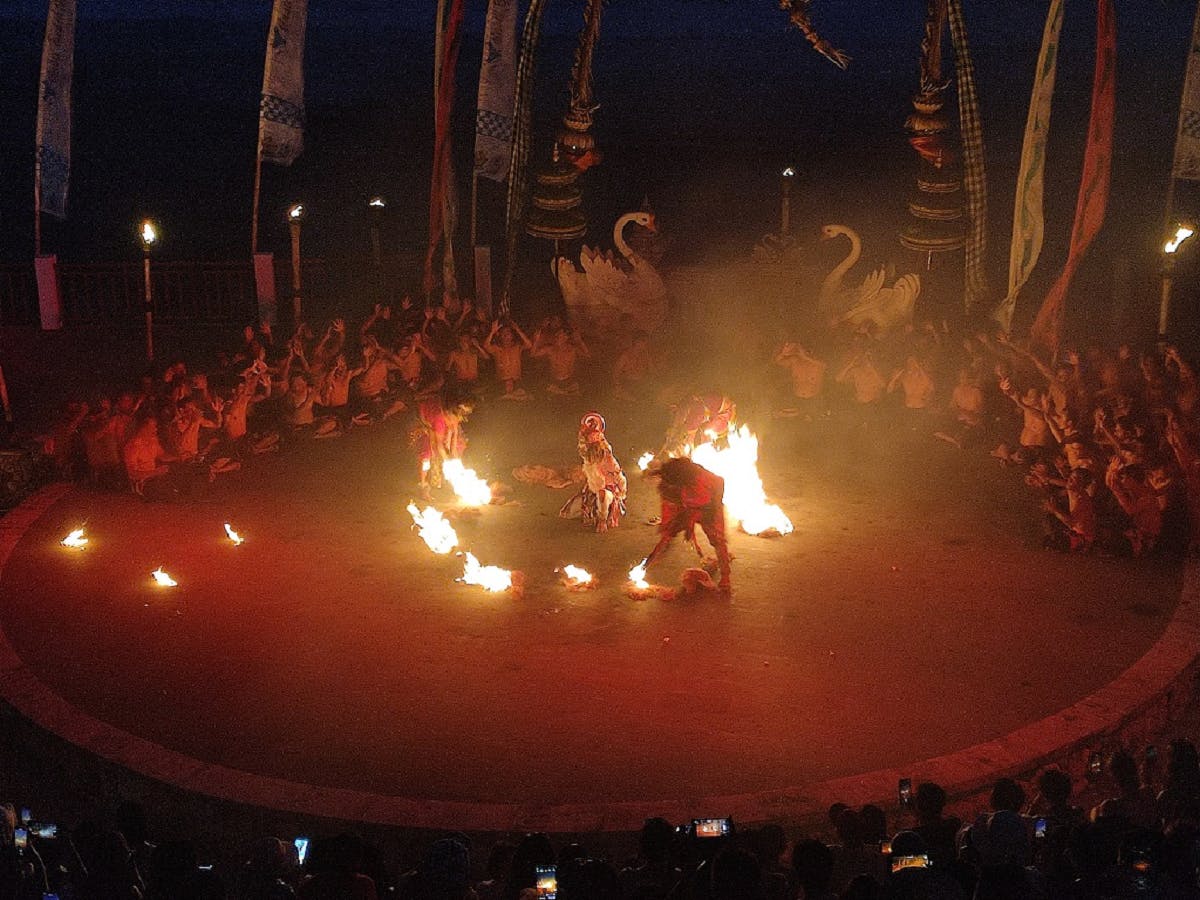
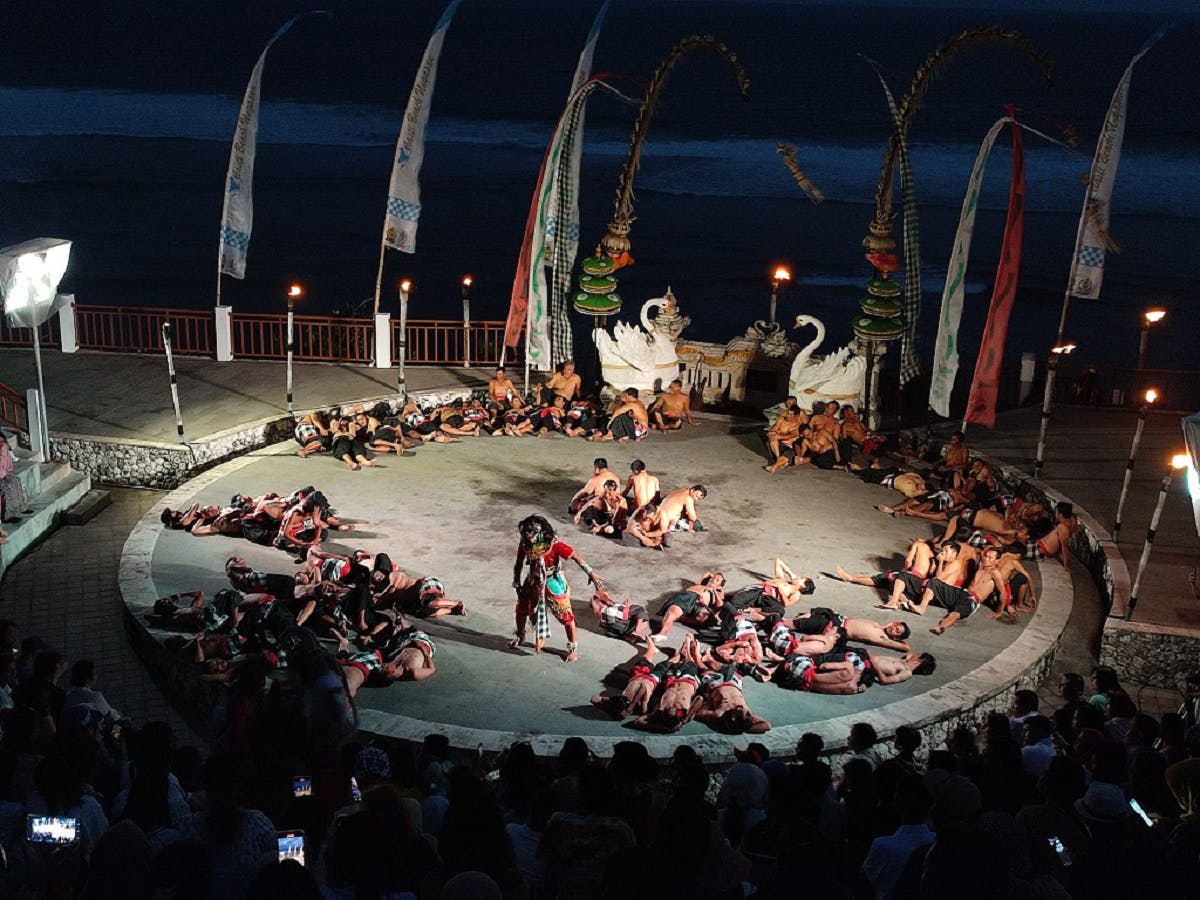


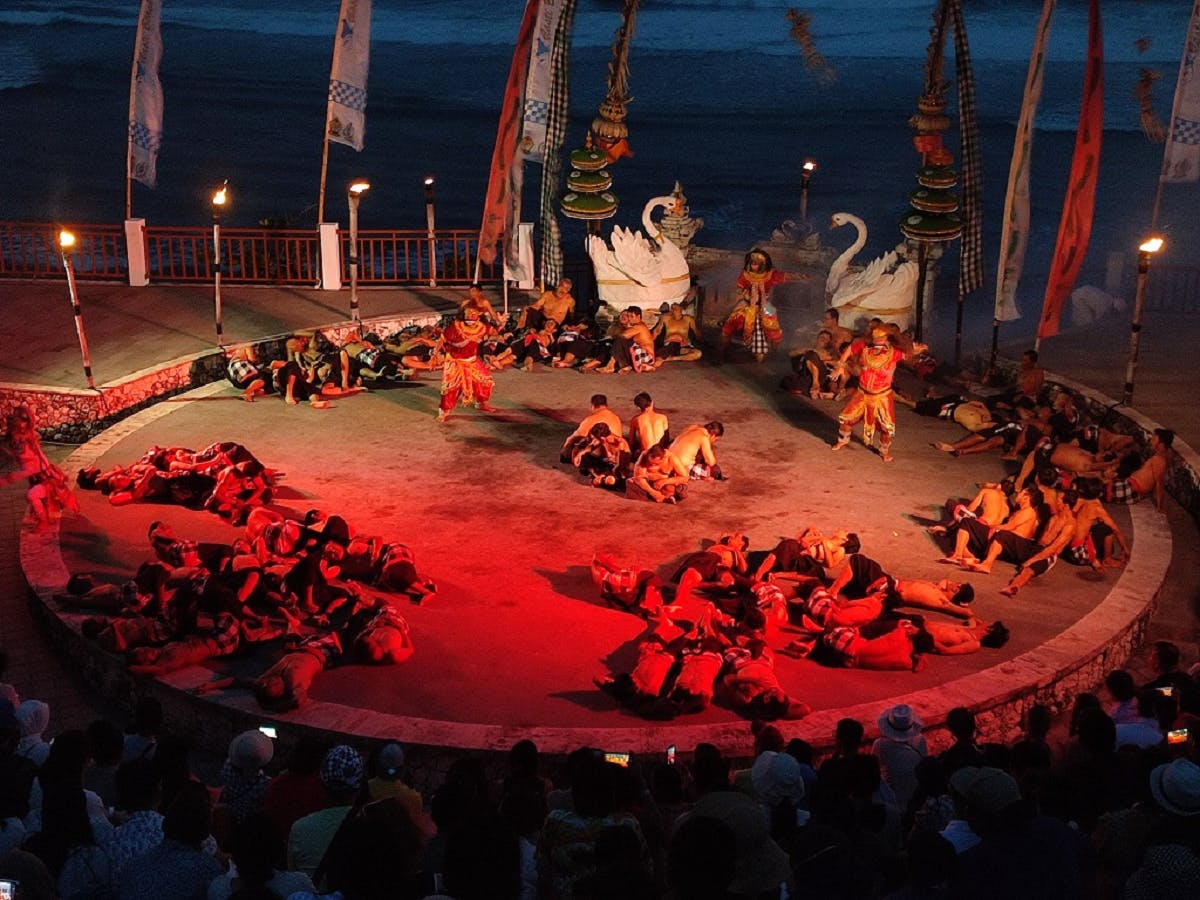
The Kecak dance was developed in the 1930s by Balinese artist Wayan Limbak in collaboration with German painter Walter Spies. It draws inspiration from the sacred Sanghyang dance, a traditional Balinese ritual performed in Hindu temples to ward off misfortune and illness. Originally, Kecak was performed exclusively by men aged 50 and above. The name “Kecak” derives from the rhythmic chant of “cak… cak… cak…” that echoes continuously throughout the performance.
In earlier times, Kecak was staged only in specific villages, such as Bona Village in Gianyar Regency. Over time, its popularity expanded, and it began to be performed across Bali, particularly during special ceremonies to honor and welcome guests. Today, Kecak has evolved into a widely showcased dance drama, especially in cultural and tourism-centered destinations throughout the island.